Quick Answer
The best synonyms for happy include joyful, cheerful, delighted, pleased, glad, content, thrilled, overjoyed, satisfied, and elated. The right choice depends on the type and intensity of happiness, from quiet contentment to intense excitement.
Quick List of Synonyms for Happy
- Joyful
- Cheerful
- Glad
- Delighted
- Pleased
- Content
- Satisfied
- Thrilled
- Excited
- Elated
- Overjoyed
- Jubilant
- Ecstatic
- Blissful
- Merry
- Upbeat
- Cheerful
- Radiant
- Enthusiastic
- Optimistic
- Hopeful
- Lighthearted
- Carefree
- Grateful
- Thankful
- Fulfilled
- Serene
- Peaceful
- Gleeful
- Exuberant
- Buoyant
- Sunny
- Chipper
- Jolly
- Tickled
- Pleased
- Delighted
- Enthralled
- Eager
What Does Happy Mean?
Happy describes a positive emotional state associated with pleasure, joy, satisfaction, or contentment. It can refer to a temporary feeling, a general mood, or a deeper sense of well-being.
The best synonym depends on the specific kind of happiness you want to express. For example, pleased often describes satisfaction with something, while thrilled and ecstatic suggest much stronger excitement.
Closest Synonyms for Happy
Joyful
Joyful describes a strong feeling of happiness, delight, or inner joy.
Example:
The children were joyful during the celebration.
Best for: Emotional, positive, and expressive writing.
Cheerful
Cheerful describes someone who is noticeably happy, positive, and pleasant.
Example:
She greeted everyone with a cheerful smile.
Best for: Describing people’s moods, personalities, and behavior.
Glad
Glad is a common and natural synonym for happy, especially when someone feels pleased about a particular event.
Example:
I’m glad you decided to come.
Best for: Everyday conversation and informal writing.
Delighted
Delighted means very pleased or happy about something.
Example:
We were delighted to hear the good news.
Best for: Strong positive reactions.
Pleased
Pleased means satisfied, happy, or glad about something.
Example:
The manager was pleased with the team’s performance.
Best for: Professional, formal, and everyday contexts.
Content
Content describes a calm feeling of satisfaction rather than intense excitement.
Example:
She felt content with her simple life.
Best for: Peaceful, reflective, and emotional contexts.
Thrilled
Thrilled describes intense excitement and happiness.
Example:
He was thrilled to receive the award.
Best for: Exciting news, achievements, and major positive events.
Elated
Elated means extremely happy and excited.
Example:
She felt elated after winning the competition.
Best for: Strong emotions and formal or polished writing.
Overjoyed
Overjoyed describes extremely intense happiness.
Example:
The parents were overjoyed when their daughter came home.
Best for: Major life events and deeply emotional moments.
Satisfied
Satisfied describes happiness that comes from having a need, goal, or expectation fulfilled.
Example:
The customer was satisfied with the service.
Best for: Results, achievements, products, services, and expectations.
Stronger Words for Happy
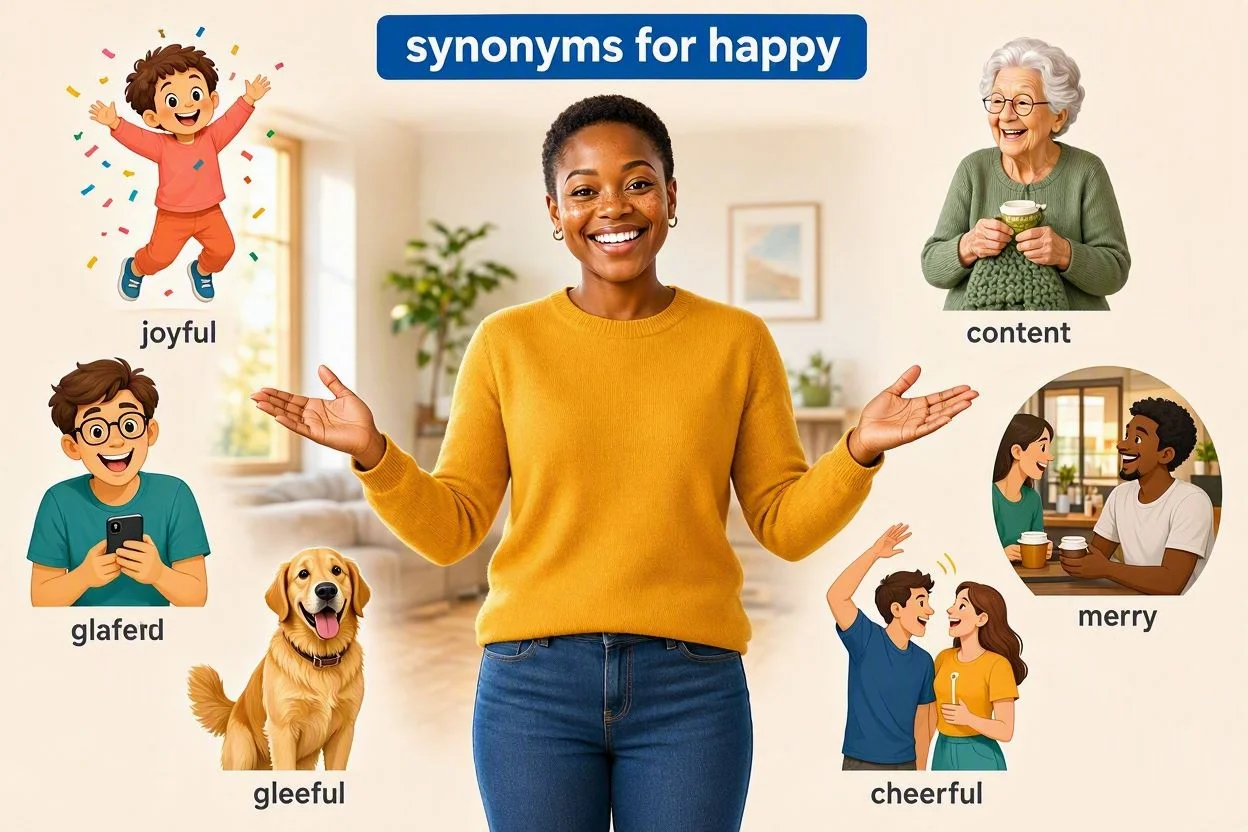
When happy feels too weak, these alternatives express greater intensity:
| Word | Meaning | Intensity |
|---|---|---|
| Glad | Pleased or happy | Mild |
| Cheerful | Bright and positive | Mild–Moderate |
| Delighted | Very pleased | Moderate |
| Thrilled | Extremely excited and happy | Strong |
| Elated | Extremely happy | Strong |
| Overjoyed | Filled with great joy | Very strong |
| Ecstatic | Overwhelmingly happy | Very strong |
| Jubilant | Extremely joyful, often after a victory | Very strong |
| Blissful | Deeply peaceful and happy | Very strong |
Synonyms for Happy Feelings
Different situations call for different words.
- Joyful — full of joy
- Cheerful — noticeably positive and happy
- Content — peacefully satisfied
- Delighted — very pleased
- Thrilled — highly excited
- Elated — extremely happy
- Ecstatic — overwhelmingly happy
- Blissful — deeply peaceful and happy
- Grateful — happy because you appreciate something
- Relieved — happy because a worry or problem has ended
- Fulfilled — happy because life or an achievement feels meaningful
- Carefree — happy without worry or responsibility
Synonyms for Happy Person
When describing someone who is generally happy, positive, or pleasant, consider:
- Cheerful
- Joyful
- Upbeat
- Optimistic
- Lighthearted
- Carefree
- Jolly
- Merry
- Gleeful
- Buoyant
- Sunny
- Chipper
- Content
- Positive
- Enthusiastic
Example:
Her cheerful personality made everyone around her feel welcome.
Synonyms for Happy in a Relationship
When describing happiness in a relationship, the best word depends on the meaning.
- Content — satisfied and comfortable
- Fulfilled — emotionally satisfied
- Joyful — experiencing happiness together
- Grateful — appreciative of the relationship
- Loving — expressing affection and care
- Blissful — deeply happy and peaceful
- Satisfied — pleased with the relationship
Example:
They were content and fulfilled in their relationship.
Synonyms for Happy About Something
When someone is happy because of a particular event or outcome, these words often work well:
- Glad
- Pleased
- Delighted
- Thrilled
- Excited
- Grateful
- Relieved
- Satisfied
- Overjoyed
- Ecstatic
Example:
She was thrilled about her new job.
Formal Synonyms for Happy
For formal or professional writing, consider:
- Pleased
- Delighted
- Satisfied
- Content
- Fulfilled
- Grateful
- Appreciative
- Optimistic
- Enthusiastic
- Jubilant
Example:
Instead of:
The client was happy with the results.
Try:
The client was pleased with the results.
Pleased is generally more appropriate in professional communication.
Academic Synonyms for Happy
Academic writing usually benefits from precise descriptions rather than repeatedly using happy.
Useful alternatives include:
- Satisfied
- Content
- Positive
- Optimistic
- Fulfilled
- Pleased
- Emotionally positive
- Subjectively satisfied
- Well-being-oriented
Example:
Instead of:
The participants were happy with the program.
Try:
The participants reported high levels of satisfaction with the program.
The second version is more precise because it identifies satisfaction rather than using the broad term happy.
Casual Synonyms for Happy
In casual conversations, you can use:
- Glad
- Excited
- Awesome
- Stoked
- Pleased
- Psyched
- Cheerful
- Chipper
- Over the moon
- On cloud nine
Example:
I’m so excited about the trip!
Happy vs. Glad
Happy and glad are often interchangeable, but they can have slightly different uses.
Happy can describe a general emotional state:
She is happy with her life.
Glad often describes happiness about a particular situation:
I’m glad you came.
A simple rule is that happy often describes a broader state, while glad frequently describes a specific positive reaction.
Happy vs. Joyful
Joyful usually expresses a stronger or more expressive sense of happiness than happy.
- Happy: broad and everyday
- Joyful: deeply or visibly full of joy
Example:
The wedding was a joyful occasion.
Happy vs. Content
These words describe different types of positive emotion.
Happy can involve excitement, pleasure, or joy.
Content usually describes calm satisfaction without strong excitement.
Example:
She was happy when she won the prize.
She was content living a quiet life.
Happy vs. Excited
Happy and excited are related but not identical.
Happy describes positive emotion generally.
Excited specifically involves anticipation, energy, or enthusiasm about something.
Someone can be happy without being excited.
Example:
He was happy with his life but not particularly excited about the upcoming event.
Happy vs. Satisfied
Satisfied usually means that expectations, needs, or goals have been met.
Happy has a broader emotional meaning.
- Happy: general positive emotion
- Satisfied: pleased because something meets expectations
Example:
The customer was satisfied with the service.
How to Choose the Right Synonym for Happy
Use this quick guide:
- General happiness: happy, glad
- Friendly personality: cheerful, upbeat, sunny
- Calm happiness: content, peaceful, serene
- Strong happiness: delighted, thrilled
- Very strong happiness: elated, overjoyed
- Extreme happiness: ecstatic, jubilant
- Happiness after success: elated, thrilled, jubilant
- Happiness from satisfaction: pleased, satisfied
- Happiness from appreciation: grateful, thankful
- Happiness without worry: carefree, lighthearted
- Professional writing: pleased, satisfied, delighted
- Academic writing: satisfied, positive, fulfilled, optimistic
Sentence Transformations
1. Original
She was happy about the promotion.
Better alternative:
She was thrilled about the promotion.
Why: Thrilled expresses stronger excitement than happy.
2. Original
He was happy with his new job.
Better alternative:
He was pleased with his new job.
Why: Pleased naturally describes satisfaction with a situation.
3. Original
The children were happy at the party.
Better alternative:
The children were joyful at the party.
Why: Joyful gives the sentence a more expressive emotional tone.
4. Original
She felt happy after finishing the project.
Better alternative:
She felt fulfilled after finishing the project.
Why: Fulfilled suggests satisfaction from accomplishing something meaningful.
5. Original
He was very happy when he won.
Better alternative:
He was elated when he won.
Why: Elated conveys intense happiness after a major success.
6. Original
The family was happy to see him again.
Better alternative:
The family was overjoyed to see him again.
Why: Overjoyed expresses exceptionally strong happiness.
7. Original
She was happy with her quiet life.
Better alternative:
She was content with her quiet life.
Why: Content suggests peaceful satisfaction rather than excitement.
8. Original
The team was happy after the victory.
Better alternative:
The team was jubilant after the victory.
Why: Jubilant is especially appropriate for intense celebration after success.
9. Original
He looked happy when he heard the news.
Better alternative:
He looked delighted when he heard the news.
Why: Delighted communicates a stronger positive reaction.
10. Original
She felt happy about helping others.
Better alternative:
She felt fulfilled by helping others.
Why: Fulfilled emphasizes meaningful personal satisfaction.
Common Mistakes When Using Synonyms for Happy
1. Treating every synonym as identical
Content, excited, satisfied, delighted, and ecstatic describe different forms or levels of happiness.
2. Using “ecstatic” for ordinary happiness
Ecstatic is extremely strong. It is better reserved for moments of overwhelming joy.
3. Confusing happiness with excitement
Excited usually involves anticipation or high energy, while happy is much broader.
4. Using “satisfied” to describe every happy feeling
Satisfied usually relates to fulfilled expectations, needs, or goals.
5. Ignoring tone
Glad sounds natural in everyday conversation, while jubilant can sound more formal or literary.
6. Overusing sophisticated vocabulary
Words such as exuberant, jubilant, and ecstatic should not replace happy when a simple word communicates the idea better.
7. Using “content” to describe intense excitement
Content describes peaceful satisfaction, not overwhelming joy.
When Not to Use an Alternative to Happy
Sometimes happy is the best word. It is simple, familiar, flexible, and natural in everyday communication.
For example:
I’m happy you’re here.
Replacing happy with ecstatic could make the sentence sound overly dramatic unless the situation genuinely involves intense emotion.
Similarly, content should not replace happy when you mean excitement, and satisfied should not replace it when you simply mean joy.
The goal of using synonyms is not to eliminate happy from your writing. It is to choose a more precise word when it better expresses your intended emotion.
Editor’s Choice: Best Synonyms for Happy
If you need only a few reliable alternatives, these are strong choices:
- Joyful — best for expressive happiness
- Cheerful — best for a positive personality or mood
- Delighted — best for strong pleasure
- Pleased — best for professional and everyday situations
- Content — best for calm satisfaction
For very intense happiness, choose thrilled, elated, overjoyed, ecstatic, or jubilant according to the situation.
Frequently Asked Questions About Synonyms for Happy
What is the best synonym for happy?
Joyful is one of the best general synonyms for happy. Depending on the context, glad, cheerful, delighted, pleased, content, thrilled, or elated may be more precise.
What is a stronger word for happy?
Stronger alternatives include delighted, thrilled, elated, overjoyed, ecstatic, jubilant, and blissful. These words express greater emotional intensity than ordinary happiness.
What is a formal synonym for happy?
Formal alternatives include pleased, satisfied, delighted, content, fulfilled, and grateful. Pleased and satisfied are particularly useful in professional communication.
What is a synonym for happy in academic writing?
Useful academic alternatives include satisfied, fulfilled, positive, optimistic, and content. In research writing, phrases such as highly satisfied or positive emotional state may be more precise.
What is the difference between happy and joyful?
Happy is a broad, everyday term for positive emotion. Joyful usually suggests a stronger, more expressive, or sustained feeling of joy.
What is the difference between happy and content?
Happy can describe excitement, pleasure, or general well-being. Content usually means peacefully satisfied without strong excitement.
What is the difference between happy and excited?
Happy describes positive emotion in general, while excited specifically suggests enthusiasm, anticipation, or heightened energy.
Key Takeaways
- Joyful is a strong general alternative to happy when you want more expressive language.
- Pleased and satisfied work well in professional and formal contexts.
- Content describes calm satisfaction, while thrilled and ecstatic express much stronger emotions.
- Choose delighted, elated, overjoyed, or jubilant when ordinary happy does not convey enough intensity.
- The best synonym depends on the type, intensity, tone, and context of the happiness being described.