
Quick Answer
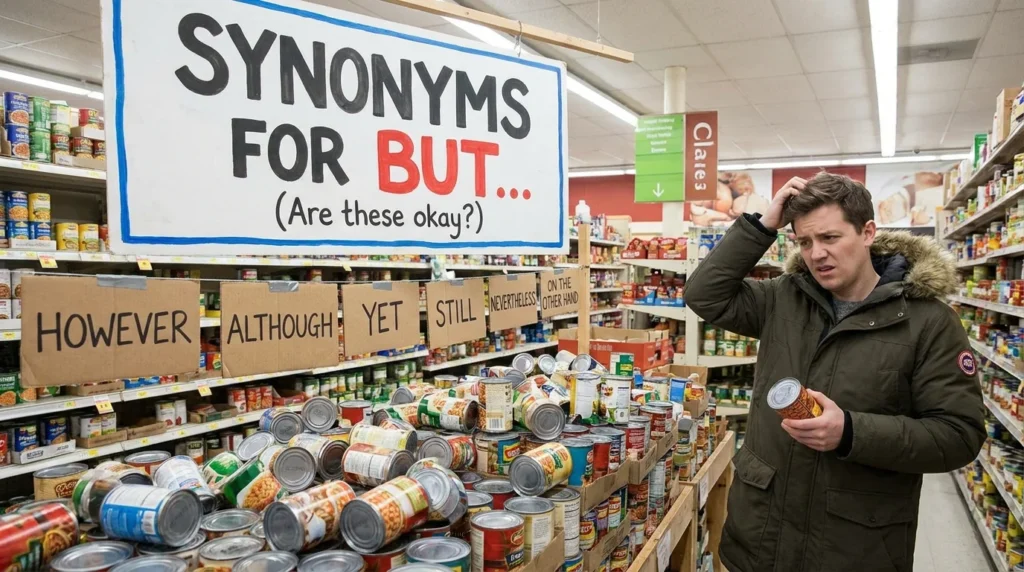
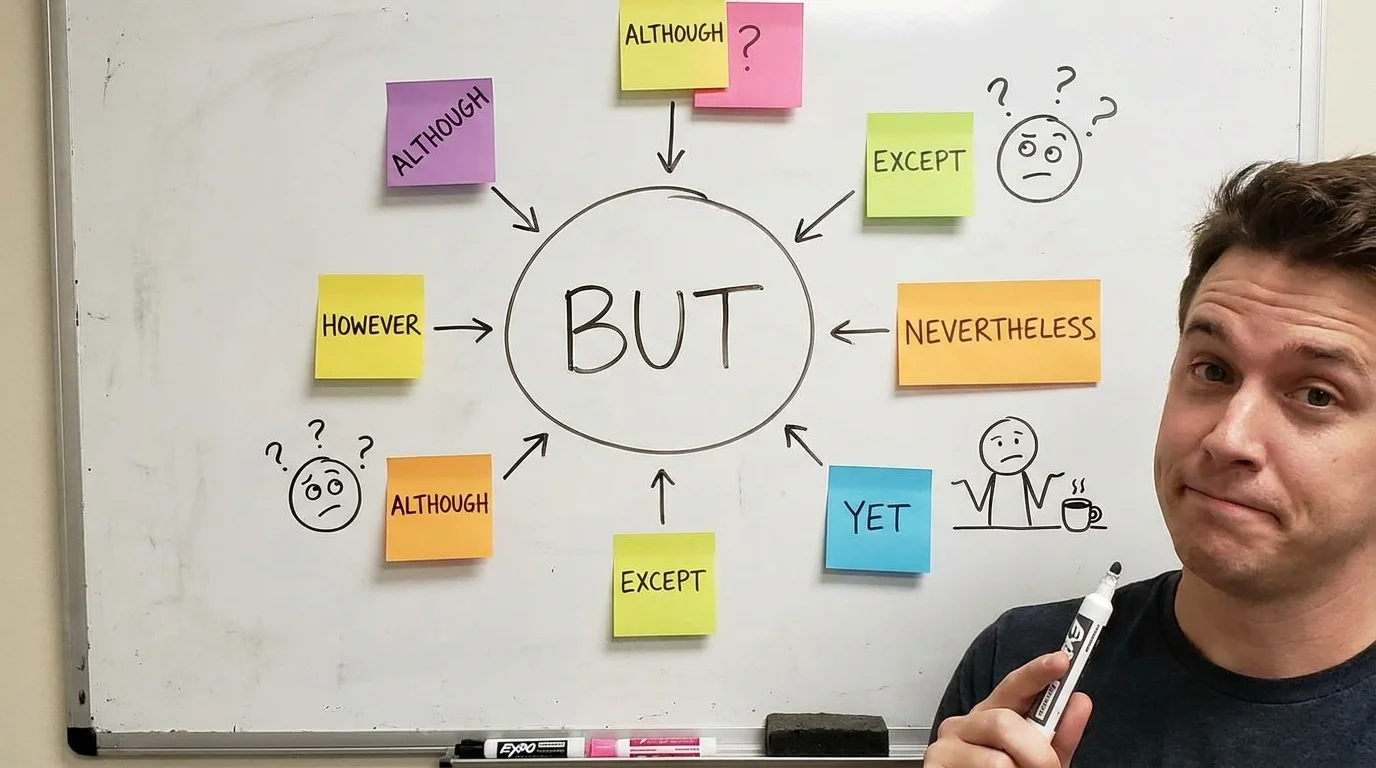
Common alternatives to but include however, yet, although, though, nevertheless, nonetheless, still, even so, on the other hand, in contrast, and whereas. The best choice depends on whether you are expressing contrast, concession, comparison, or exclusion.
Quick List of Synonyms for But
- However
- Yet
- Although
- Though
- Nevertheless
- Nonetheless
- Still
- Even so
- On the other hand
- In contrast
- By contrast
- Despite this
- That said
- Whereas
- While
- Conversely
- Instead
- Except
- Except for
- Other than
- In spite of this
- All the same
What Does But Mean?
But is most commonly used to introduce a contrast between two ideas, statements, or situations.
Example:
“The restaurant was expensive, but the food was excellent.”
Here, but connects two contrasting ideas.
But can also mean except, which gives it a different meaning:
“Everyone but Sarah attended the meeting.”
Here, but means except, not “however.”
Because but has different meanings and grammatical functions, its alternatives are not always interchangeable.
The Closest Alternatives to But
However
However is one of the most common alternatives when but introduces a contrast.
Example:
“The apartment is small. However, it is comfortable.”
It is especially useful in formal, academic, and professional writing.
Grammar: Unlike but, however usually functions as a sentence adverb or transition. You generally cannot replace but with however without changing the sentence structure.
Yet
Yet can connect two contrasting clauses in much the same way as but.
Example:
“She was nervous, yet she gave an excellent presentation.”
It is concise, natural, and slightly more emphatic than but in some contexts.
Although
Although introduces a concessive clause, showing that one fact does not prevent another fact from being true.
Example:
“Although the weather was poor, we went hiking.”
Although is useful in formal, academic, and general writing, but its grammar differs from but.
Though
Though has a similar function to although but often sounds more conversational.
Example:
“Though the task was difficult, we finished it.”
It can also appear at the end of a sentence:
“The task was difficult. We finished it, though.”
Nevertheless and Nonetheless
Nevertheless and nonetheless both mean roughly despite that or in spite of that. They emphasize that the second point remains true despite the first.
Example:
“The evidence was limited. Nevertheless, the researchers continued.”
Both are particularly suitable for academic, formal, and professional writing.
Still
Still introduces a contrasting point in a more conversational way.
Example:
“The hotel was expensive. Still, we enjoyed our stay.”
It works well in everyday communication and general writing.
Even So
Even so means despite that and emphasizes the contrast between two ideas.
Example:
“The instructions were confusing. Even so, we completed the task.”
It is natural in both conversational and general writing.
Formal, Academic, and Professional Alternatives
For formal or academic writing, useful alternatives include:
- However
- Nevertheless
- Nonetheless
- Although
- Whereas
- In contrast
- By contrast
- Despite this
- That said
- Conversely
For example:
Everyday:
“The proposal is expensive, but it could save money later.”
Formal:
“The proposal is expensive. Nevertheless, it could reduce long-term costs.”
Academic:
“Previous research produced positive results. However, the current study found limited evidence.”
The goal is not to eliminate but from formal writing. It is already grammatically correct and often the clearest choice.
Comparison and Contrast Alternatives
Some alternatives are better when you are comparing two subjects or presenting two sides of an issue.
On the Other Hand
Use on the other hand when presenting another perspective or side of an argument.
Example:
“Working from home reduces commuting time. On the other hand, some employees miss office interaction.”
In Contrast / By Contrast
Use in contrast or by contrast to highlight a clear difference.
Example:
“The first proposal focuses on cost. In contrast, the second prioritizes quality.”
Whereas
Whereas directly compares two different situations, people, or characteristics.
Example:
“John prefers working alone, whereas Maria enjoys teamwork.”
Conversely
Conversely indicates an opposite relationship or result.
Example:
“Higher prices may reduce demand. Conversely, lower prices may increase demand.”
Conversely is more specific than but and should not be used as a generic replacement for every contrast.
Synonyms for But Meaning “Except”
When but means except, use alternatives such as:
- Except
- Except for
- Other than
- Apart from
- Excluding
- With the exception of
Example:
“Everyone but James attended.”
→ “Everyone except James attended.”
These words should not be confused with contrast transitions such as however or nevertheless.
But vs. Its Most Common Alternatives
| Word/Phrase | Main Function | Tone | Direct Replacement? |
|---|---|---|---|
| But | General contrast | Neutral | — |
| However | Contrast/qualification | Neutral/Formal | Often, with restructuring |
| Yet | Direct contrast | Neutral | Usually |
| Although | Concession | Formal/Neutral | No, grammar differs |
| Though | Contrast/concession | Conversational | Context-dependent |
| Nevertheless | Contrast despite a fact | Formal | Often, with restructuring |
| Nonetheless | Contrast despite a fact | Formal | Often, with restructuring |
| Still | Contrast/concession | Conversational | Often, with restructuring |
| Even so | Despite a previous point | Neutral | Often, with restructuring |
| Whereas | Direct comparison | Formal/Neutral | No |
| In contrast | Highlights difference | Formal | Context-dependent |
| On the other hand | Presents another viewpoint | Neutral/Formal | Context-dependent |
| Conversely | Shows an opposite relationship | Formal | Context-dependent |
| Except | Excludes something | Neutral | Only when but means “except” |
How to Choose the Right Alternative
Choose based on the relationship between your ideas rather than simply trying to avoid the word but.
For a simple contrast:
Use but, yet, or however.
For a formal concession:
Use nevertheless or nonetheless.
For a dependent concessive clause:
Use although or though.
For a direct comparison:
Use whereas, in contrast, or by contrast.
For another side of an issue:
Use on the other hand.
For an opposite relationship:
Use conversely.
For a conversational tone:
Use still, though, or even so.
When “but” means “except”:
Use except, except for, or other than.
Sentence Transformations
1. Simple Contrast
Original:
“The restaurant was expensive, but the food was excellent.”
Alternative:
“The restaurant was expensive. However, the food was excellent.”
Why:
However creates a smooth transition between two contrasting ideas.
2. Concise Contrast
Original:
“She was tired, but she kept working.”
Alternative:
“She was tired, yet she kept working.”
Why:
Yet provides a concise and slightly emphatic contrast.
3. Formal Concession
Original:
“The task was difficult, but we completed it.”
Alternative:
“The task was difficult. Nevertheless, we completed it.”
Why:
Nevertheless emphasizes that the task was completed despite its difficulty.
4. Academic Contrast
Original:
“The evidence was limited, but the researchers continued.”
Alternative:
“The evidence was limited. Nonetheless, the researchers continued.”
Why:
Nonetheless gives the sentence a formal, academic tone.
5. Concessive Clause
Original:
“The weather was terrible, but we went hiking.”
Alternative:
“Although the weather was terrible, we went hiking.”
Why:
Although creates a clear concessive structure.
6. Conversational Contrast
Original:
“The hotel was expensive, but we enjoyed our stay.”
Alternative:
“The hotel was expensive. Still, we enjoyed our stay.”
Why:
Still sounds natural and conversational.
7. Direct Comparison
Original:
“The first option is cheaper, but the second is more reliable.”
Alternative:
“The first option is cheaper, whereas the second is more reliable.”
Why:
Whereas clearly compares two different characteristics.
8. Qualification
Original:
“The proposal is expensive, but it may improve efficiency.”
Alternative:
“The proposal is expensive. That said, it may improve efficiency.”
Why:
That said acknowledges a drawback before introducing another consideration.
9. Contrast Between Subjects
Original:
“City life is busy, but rural life is quieter.”
Alternative:
“City life is busy. In contrast, rural life is quieter.”
Why:
In contrast makes the difference between the two settings explicit.
10. Meaning “Except”
Original:
“Everyone but James attended the meeting.”
Alternative:
“Everyone except James attended the meeting.”
Why:
Here but means except, so except is the accurate alternative.
Common Mistakes
Using “however” exactly like “but”
Incorrect:
“She was tired, however she continued.”
Correct:
“She was tired, but she continued.”
Or:
“She was tired. However, she continued.”
Combining “although” and “but”
Incorrect:
“Although she was tired, but she continued working.”
Correct:
“Although she was tired, she continued working.”
Or:
“She was tired, but she continued working.”
Joining clauses with “nevertheless” and a comma
Incorrect:
“She was tired, nevertheless she continued.”
Better:
“She was tired. Nevertheless, she continued.”
Using “conversely” for every contrast
Conversely specifically suggests an opposite relationship. It is not simply a more formal version of but.
Using “whereas” without a meaningful comparison
Whereas works best when two subjects, situations, or characteristics are being directly contrasted.
Overusing “on the other hand”
Use it when presenting another side or perspective. It can sound repetitive if inserted before every contrasting statement.
Replacing “but” unnecessarily
But is clear, concise, and completely appropriate in formal writing. Replacing it does not automatically improve a sentence.
When Not to Replace But
Sometimes but is the best choice.
Example:
“She wanted to go, but she was too tired.”
This sentence is direct and natural. Replacing but with a longer transition may make the sentence less efficient rather than more sophisticated.
Good writing is not about avoiding common words. It is about choosing the clearest and most accurate expression for the intended meaning.
Editor’s Choice: Best Alternatives to But
However — best general formal alternative
Yet — best concise alternative
Although — best for concessive clauses
Nevertheless — best for formal contrast
Nonetheless — strong academic and professional option
Still — best conversational alternative
Whereas — best for direct comparisons
In contrast — best for highlighting differences
Frequently Asked Questions About Synonyms for But
What is the best synonym for but?
However is one of the most common alternatives to but, especially in formal writing. Depending on the context, yet, although, nevertheless, nonetheless, still, or though may be more precise.
What is a formal synonym for but?
Formal alternatives include however, nevertheless, nonetheless, although, in contrast, by contrast, and whereas. The correct choice depends on the grammatical structure and relationship between ideas.
What can I use instead of but in an essay?
In an essay, you can use however, nevertheless, nonetheless, although, whereas, in contrast, by contrast, or despite this. Do not replace but automatically; choose the transition that best expresses your meaning.
What is a casual synonym for but?
Casual alternatives include yet, still, though, and even so. However, but itself is completely natural in casual conversation.
Are but and however interchangeable?
They can express similar contrasts, but they are not always grammatically interchangeable. But is a coordinating conjunction, while however usually functions as a transition or sentence adverb.
What is the difference between but and although?
But connects two contrasting clauses, while although introduces a dependent clause.
Example: “She was tired, but she continued.” / “Although she was tired, she continued.”
What is the difference between but and yet?
Both can connect contrasting ideas. But is more neutral and common, while yet can give the contrast slightly more emphasis.
Key Takeaways
- However, yet, and although are common alternatives to but, but they follow different grammatical patterns.
- Nevertheless and nonetheless are strong choices for formal and academic writing.
- Whereas, in contrast, and on the other hand work best for comparisons and opposing viewpoints.
- When but means except, use except, except for, or other than instead.
- Do not replace but simply for variety; choose an alternative only when it improves precision, tone, or sentence structure.